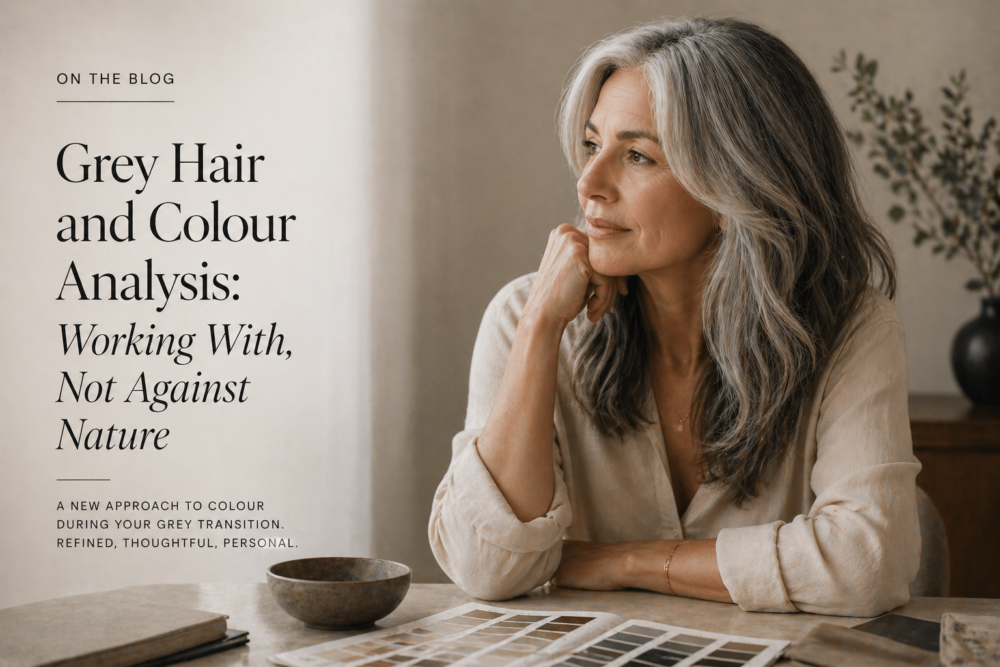
When grey appears, the colour that suited you years ago may need another look. Your natural depth and contrast may shift. That does not mean you have to stop covering grey. It means tone, dimension and maintenance deserve fresh consideration.
Start With the Result You Want
Some women want complete coverage. Some want the grey softened. Others want to transition gradually toward their natural colour. None of these decisions is more correct. Before choosing a technique, I ask how much grey you want to see and how often you want to return.
What Colour Analysis Adds
Grey can change the balance between your hair, skin and features. A shade that once felt effortless may now look too warm, too dark or too strong. Looking at your natural colour, skin harmony and overall contrast helps us choose a tone that feels current and recognisably yours.
That assessment matters just as much for full coverage as it does for blending. If you want every white hair concealed, the colour can still have depth and dimension without feeling flat.
For a personal starting point, take my free Seasonal Colour Quiz. It considers your colouring, wardrobe preferences and approach to grey, then offers a suggested season and a downloadable one-page guide with a hair colour level and hue to explore in consultation.
When Grey Is Difficult to Cover
Some grey hair, especially around the hairline or parting, can resist colour or appear translucent soon after an appointment. I look at your colour history, where the result has failed and how quickly it has changed before recommending another approach. The plan must be based on the hair in front of me.
Choosing the Degree of Coverage
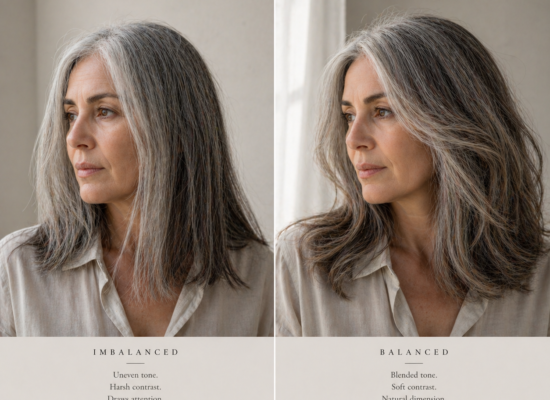
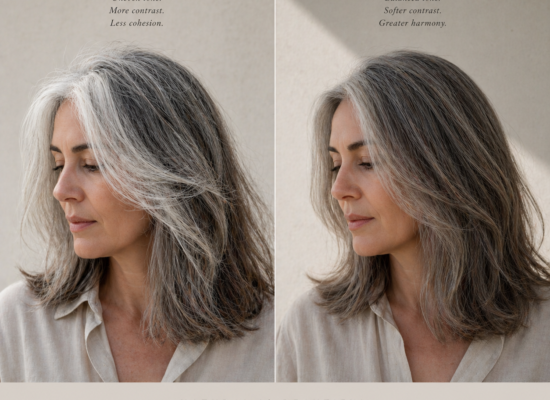
Complete coverage aims to conceal visible grey. Blending allows some grey to remain while softening contrast. Transition is a gradual change toward more natural grey. Colour analysis helps decide the tone and visual weight within any of these choices.
If your preference is complete coverage, we also plan for visible new growth and a realistic return rhythm. If you prefer blending, we discuss how much grey will remain visible and what the grow-out may look like. Honesty about maintenance is part of the service.
A Personal Colour Story
Your hair can change without your choices being dictated by a philosophy about ageing. A refined result honours what you want to see in the mirror and makes technical sense for your hair.
If you would like to talk through coverage, resistant grey or a softer transition, explore the Private Atelier.
Enjoyed this article?