The Truth
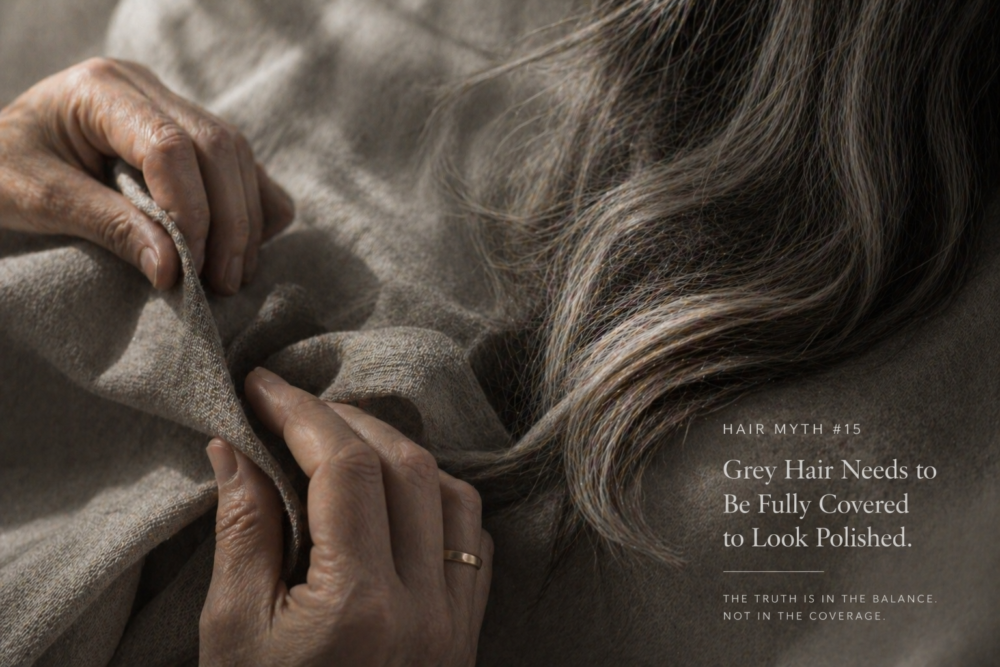
No. Grey hair can look polished when it is fully covered, softly blended or deliberately left visible. The amount of coverage is a personal choice, not a measure of taste or confidence.
If you want every grey strand covered, that is a complete and valid brief. My role is to create a tone that suits you and a plan you can maintain.
Why Full Coverage Can Look Natural
Complete coverage does not have to mean one flat colour from roots to ends. Depth, tone and dimension can be planned together, even when the aim is to conceal grey. The right decision depends on your natural base, your existing colour and how much contrast you enjoy.
If grey has refused colour at the hairline or faded quickly, I assess what has happened before and adjust the plan to the hair in front of me. A good result begins with a careful consultation rather than a blanket promise.
When Blending May Suit You
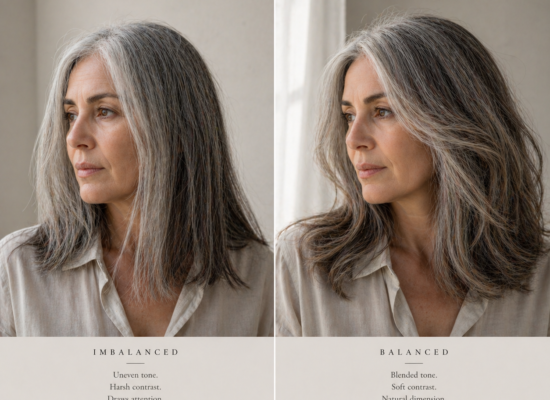
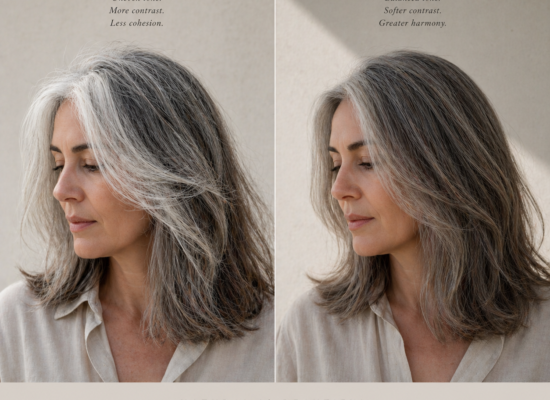
You may prefer to keep some grey visible or reduce the contrast of new growth. In that case, blending can be a thoughtful option. It may be especially useful if you are gradually moving toward natural grey or want a softer line between visits.
Blending is not automatically more modern, more beautiful or more natural than complete coverage. Its value depends on what you want to see in the mirror.
The Better Question
Do you want no grey visible, less obvious grey, or to work toward your natural grey? Once we know the answer, we can discuss tone, condition, past coverage results and the maintenance rhythm that suits your life.
Polish comes from a result that feels intentional and personal. If you would like to explore the right approach for your hair, visit the Private Atelier.
Enjoyed this article?