The Truth
Grey blending and grey coverage have different aims. Complete coverage is for the woman who does not want visible grey. Blending allows some grey to remain and softens the contrast as it grows. Neither choice is more authentic or more sophisticated.
The useful question is simple: how much grey do you want to see?
What Complete Coverage Can Do
Good grey coverage conceals the white hair while choosing depth and tone that suit the person wearing it. It need not look flat or unnatural. If grey has resisted colour at the hairline, looked translucent or faded quickly, I assess the hair and previous colour before planning the next application.
New growth will eventually show, so we also discuss how often you want to return. A clear maintenance plan is part of a good result, not a reason to talk you out of coverage.
What Blending Can Do
Blending uses placement, tone and selective colour to make grey less obvious without necessarily concealing every strand. It can create a softer transition at the roots and may suit someone who wants more flexibility between visits or is gradually moving toward natural grey.
The result and schedule depend on your starting colour, percentage of grey and desired contrast. Blending is an option, not an upgrade from coverage.
The Difference in Practice
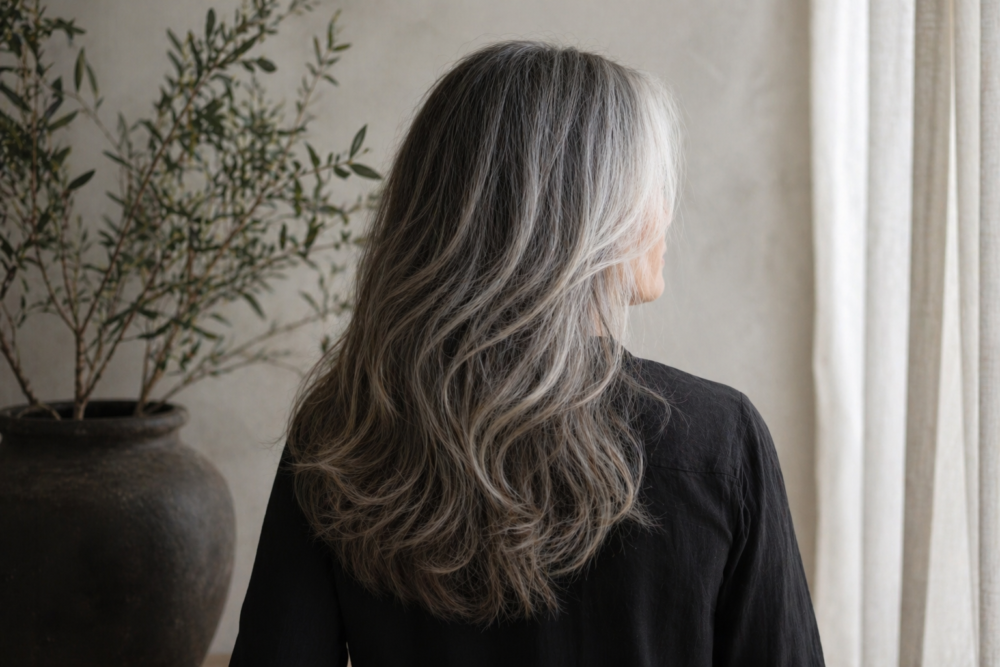
Complete coverage: the aim is no visible grey immediately after the service; new grey becomes visible with growth. Blending: some grey can remain visible within a softer, more dimensional result. Either approach can be refined and natural-looking when it is designed around your hair.
Which approach suits your maintenance preferences?
Think beyond how your colour looks on appointment day. The real test is whether you feel comfortable with it several weeks later. Complete coverage offers a more uniform finish at first, but contrasting new growth can be noticeable. Blending may soften that contrast, although it does not eliminate regrowth or guarantee fewer visits.
- Choose coverage when: you prefer not to see grey after colouring and are comfortable maintaining the roots as they appear.
- Consider blending when: you are comfortable seeing some natural grey and would prefer less contrast between coloured hair and new growth.
- Consider a gradual transition when: you want to reduce or stop permanent coverage over time. Existing artificial colour, condition and length will influence the plan.
For a closer look at the possibilities, read A Softer Approach to Grey Hair or my guide to transitioning to natural grey.
What should I book for grey coverage or blending?
If your haircut is already working and colour alone needs attention, the Colour Refinement Session ($200) may be the right starting point. If you need both colour and a haircut, consider the Full Atelier Session ($300). A more involved colour correction or transition may require a different plan after consultation, so please contact me before booking if you have significant existing colour to change.
Where Resistant Grey Fits
Hair that does not cover evenly is a separate technical challenge. Before recommending a plan, I look at where the colour has failed, how quickly it changes, your previous services and the result you want. I would not promise an identical outcome for every client before assessing the hair.
The Consultation Comes First
You may want every grey strand covered. You may want it softened. You may want to stop colouring it over time. My role is to understand your decision and make the colour work with your features, hair history and life between appointments.
When you are ready to book, choose the service that fits your hair and goals, then select an available time online: Book Online.
At my one-to-one Private Atelier in Deception Bay, both full coverage and blending are considered where suitable. See the grey coverage service details, then choose a Saturday booking time if you would like to discuss which finish fits your preferences.
Enjoyed this article?