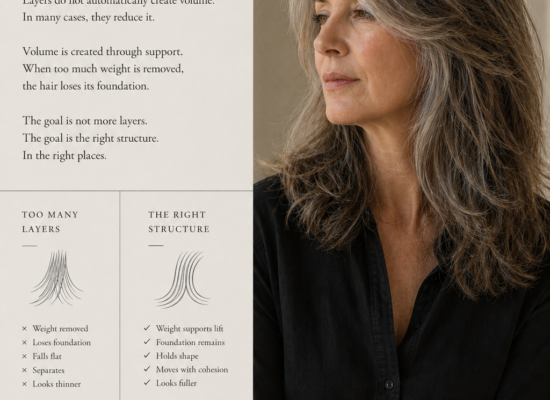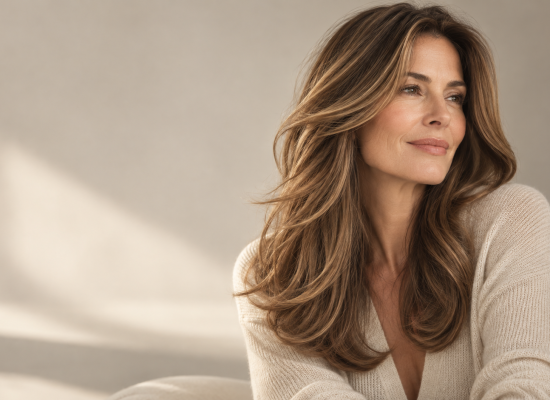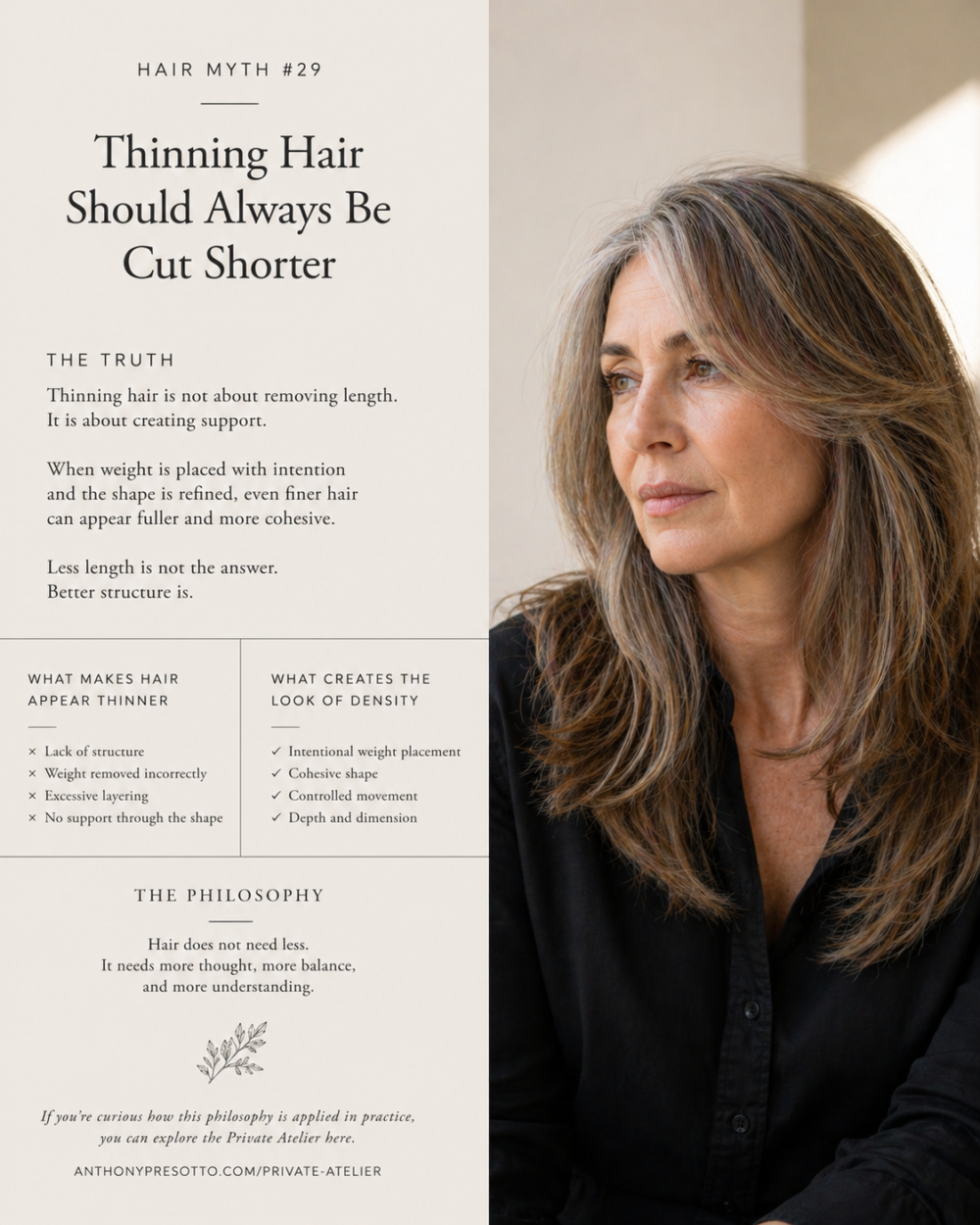
Thinning hair does not always need to be cut short. A shorter shape can make some styles easier to manage or appear fuller; another person may prefer to keep length. The choice depends on where the hair is changing, the shape you want and what feels comfortable to style.
First, be clear about what “thinning” means
People may use thinning to describe less density, increased shedding, breakage, finer-feeling strands or a change in the ends. These are not all the same issue. A haircut can change the appearance and manageability of the visible lengths, but it cannot diagnose hair loss, restore density or alter growth from the scalp.
If you have sudden or persistent shedding, visible scalp changes, or concerns that are progressing, speak with a doctor or dermatologist. The American Academy of Dermatology explains when to seek help and offers tips for managing hair loss.
A cut should reflect your preferences
Length, perimeter, layers, fringe and styling all affect the outline. A more compact shape may suit someone who wants less length to style; a longer line may feel more familiar and work well with their texture. Layers can add movement but may reduce the visual fullness of some ends if too much weight is removed. There is no one haircut that suits every head of fine or thinning hair.
Bring examples of what you like and explain how much styling you want to do. A good consultation should distinguish the look you want from expectations a haircut cannot meet.
Haircut consultation in Deception Bay
At Anthony Presotto Private Atelier, The Shizen Cut is shaped around natural fall, density, movement and the person wearing it. I can discuss a suitable style and care for the visible lengths, while medical concerns about shedding are best assessed by a health professional. Explore the Shizen Method and Saturday booking options.
Enjoyed this article?