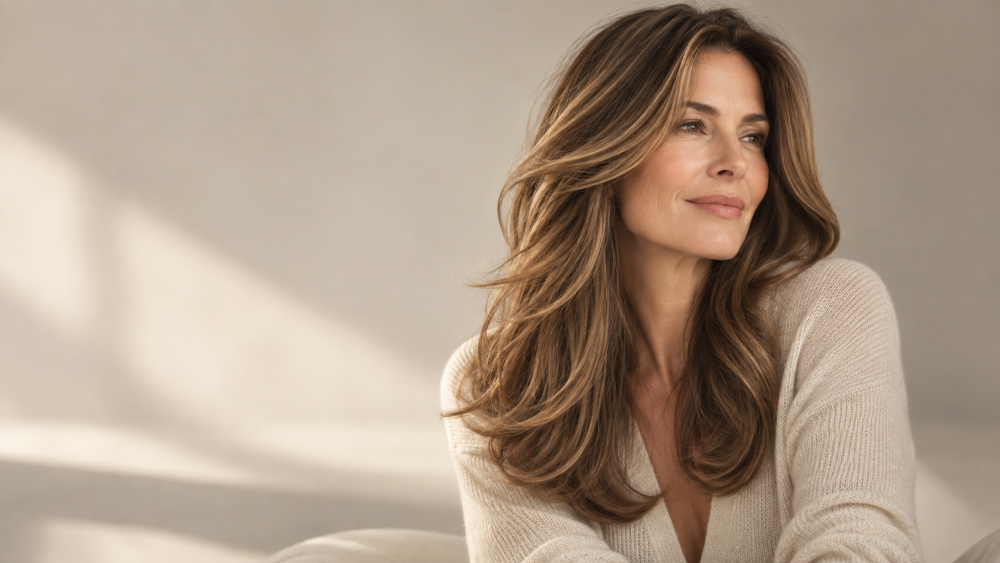
Do You Need Layers? What Layers Actually Do to Your Hair
Layers are often treated as the automatic answer when hair feels heavy, flat or difficult to style. Sometimes layers are exactly what the hair needs. Sometimes adding more layers removes the very weight that gives the shape its balance.
A considered haircut begins with a different question than “should I get layers?” The real question is: what is preventing this hair from moving well?
The answer may be excess weight. It may be the position of the perimeter, the density through the sides, the natural fall around the face, or a shape that no longer suits the way the hair is worn. Layers are one tool within that decision, not the decision itself.
What Are Layers?
Layers are sections of hair cut to different lengths throughout a haircut, rather than one uniform length. The shorter pieces sit within the longer ones and change how the hair falls, moves and holds its shape. That’s the simple definition. The harder part, and the part most generic guides skip, is knowing where those shorter pieces belong on an individual head of hair.
Types of Layers
Not all layers behave the same way, and the type matters more than the word itself.
Long layers remove weight gradually over a longer distance, so the change in length between sections is subtle. These suit hair that needs movement without losing overall fullness.
Face-framing layers are shorter pieces cut around the front, designed to draw the eye and soften the face shape. They’re often requested on their own, without layering the rest of the head.
Short or choppy layers create a more textured, disconnected finish. They work well on thick hair that needs to lose weight quickly but can read as scraggly on fine hair.
Feathered layers are cut with a softer, more blended technique, so the ends taper rather than stack. This tends to suit hair that’s worn out and relies on natural movement rather than a defined shape.
Naming the type is only useful once it’s matched to the hair in front of you, which is why a consultation matters more than a photo brought in from a search.
Layers by Hair Length
Layers on short hair have the least room to hide a mistake. Because there’s less length to soften a poorly placed layer, precision matters more, and even a small amount of layering can change the whole shape.
Layers on medium hair tend to be the most forgiving, and this is where face-framing and internal layers are most commonly combined to build movement without losing shape.
Layers on long hair can stop the silhouette from feeling solid at the ends. The risk here isn’t losing shape, it’s losing the sense of length and fullness that made someone want to keep it long in the first place. Long layers, cut with restraint, tend to solve this better than short internal layers do.
Layers and Face Shape
Face-framing layers are one of the most searched reasons people ask for layers, and for good reason. Shorter pieces around the face can soften a strong jawline, add width near the cheekbones, or draw focus toward the eyes. But face shape is only one input. Hair density, natural part, and how the hair sits when it’s not freshly styled all matter just as much. A layer that flatters a face shape in a single photo can behave completely differently once it’s washed, dried and lived in.
Shape Comes Before Layers
Many consultations begin with a request to keep the length and “just add some layers.” That’s entirely possible, but keeping every centimetre isn’t always the same as preserving a beautiful shape.
I first look at where the haircut feels heavy, where it collapses, how the perimeter relates to the shoulders, and how the front behaves when the hair moves naturally. Sometimes the most effective change isn’t a dramatic loss of length or a heavy layering technique. It’s a small adjustment to the structure so the hair begins to make sense again.
Layers for Fine Hair
Fine hair can benefit from layers, but it usually needs a clear foundation first. Too many short layers can reduce the visual density of the ends and create styling work the client never asked for.
In this situation I may preserve more weight through the perimeter, create subtle movement internally, and keep the layers long enough to maintain continuity. The result should feel lighter without looking thinner.
Layers for Thick Hair
With thick hair, the goal of layering isn’t always to remove as much as possible. Uncontrolled thinning creates short internal pieces, surface frizz, and a layered shape that expands as it grows rather than settling.
A better approach is to decide where the hair needs space through layers and where it still needs weight. Movement exists because weight has been preserved elsewhere. This balance is central to The Shizen Method: remove only what improves the whole.
Layers and Curly or Wavy Hair
Curly and wavy textures respond to layers differently to straight hair, because releasing weight changes how the curl pattern sits. Layers cut on dry, unstretched hair behave more predictably here than layers cut to a stretched length, which is one reason a generic layering approach so often disappoints curly clients.
Will Layers Suit the Way You Live?
A layered haircut has to work beyond the salon finish. I consider whether the hair is usually air-dried or blow-dried, worn loose or tied back, how much styling feels realistic, and how often the client wants to return.
Layers that look beautiful after a full blow-dry can be frustrating if they demand that same effort every morning. The better haircut, layered or not, is the one that still feels balanced when the hair has been washed at home, slept on, moved through weather and lived in for several weeks.
When I Choose Not to Add Layers
I may preserve a simpler, layer-free line when the hair is fine, the ends need to recover, the natural texture already creates movement, or existing layers need time to grow into a more coherent shape.
Choosing not to add layers isn’t a lack of technique. Often it’s the most technically honest decision available.
Growing Out Layers
Layers don’t grow out evenly, because the shorter internal pieces take longer to reach the length of the perimeter. There’s usually an awkward middle stage where the shape feels less defined but isn’t yet long enough to blend. Regular shape-maintaining trims through this stage, rather than letting it go untouched, keep the haircut from feeling like it’s in limbo. This is worth discussing at the same consultation where layers are first added, not after the fact.
Better Questions to Ask Than “Should I Get Layers?”
Instead of asking only whether you need layers, consider asking:
- Where does my hair feel too heavy?
- Where do I want movement?
- How much fullness do I want to keep?
- How will this shape behave without salon styling?
- What will it look like as it grows?
Those questions lead to a haircut designed around your actual hair, rather than a generic layering technique.
Layers at The Shizen Method
Good layers shouldn’t announce themselves as a collection of disconnected lengths. They should create balance, movement and ease while preserving what gives the hair its strength.
At my private hair atelier in Deception Bay, every decision about layers begins with observation: density, texture, natural movement, facial balance and the life the hair needs to support.
The aim is not to add more layers. It is to consider more, so the haircut continues to make sense long after the appointment.
Frequently Asked Questions About Layers
Do layers make hair look thinner?
They can, if too much weight is removed from fine hair. The fix is fewer, longer layers rather than short, heavily textured ones.
Are layers good for thick hair?
Often, yes, but the cut needs to create space rather than simply thin the hair, or the shape will expand as it grows.
Do layers work on curly hair?
They can, when cut with the curl’s natural fall in mind rather than on stretched hair.
What layers suit a round face?
Face-framing layers that start below the cheekbone tend to add definition, but density and natural part matter as much as face shape alone.
How often do layers need to be trimmed?
This depends on the layer length and how quickly the shape loses its structure, which is something to discuss at your consultation.
How do you grow out layers without it looking awkward?
Regular shape-maintaining trims through the middle stage keep the cut coherent while the shorter pieces catch up to the length.
Enjoyed this article?
2 thoughts on “Do Layers Make Hair Easier? Shape, Weight and Movement”
Comments are closed.