Dry cutting hair can help a hairdresser see how your hair actually falls, moves and sits at its natural length. It is useful when the shape depends on texture, growth direction or weight, but it is not automatically better than wet cutting. At my private atelier in Deception Bay, I choose the method after discussing the shape you want and observing your hair.
What does dry cutting mean?
Dry cutting means shaping some or all of the hair while it is dry. A haircut may also combine wet and dry work: a clean outline can be established on damp hair, then checked and refined once the hair has returned to its natural fall. The useful question is not whether a cut is labelled “dry”, but whether the method lets the hairdresser make sound decisions for your hair.
What can a hairdresser see when the hair is dry?
Dry hair shows the length, movement and weight you are likely to see between appointments. It can make certain details easier to assess, including how a fringe follows a growth direction, where a crown lifts, how a bend changes the outline, or how curls contract as they dry. It also lets me see whether a section falls away from the face or settles across it.
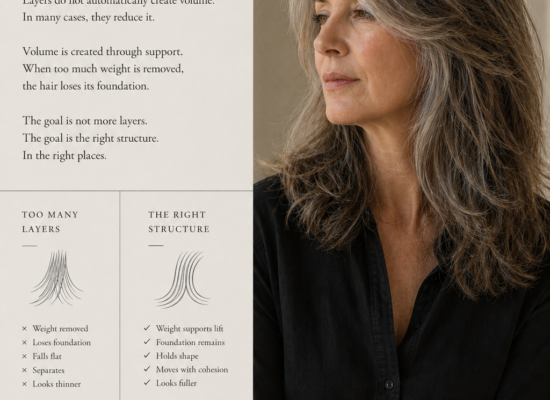
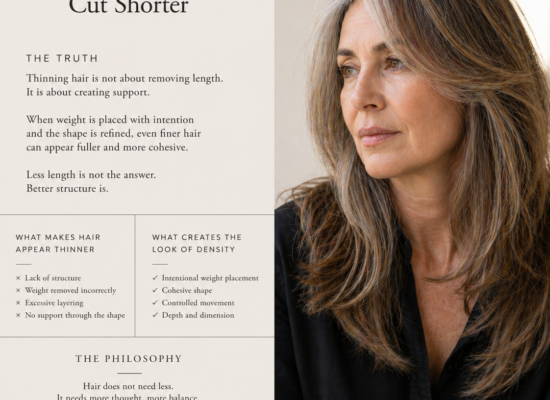
This can be helpful when refining the perimeter, adjusting layers or balancing a shape that looks different once the hair is dry. Small changes matter: removing weight in one area can alter how another section moves, so I work gradually and keep checking the overall silhouette.
Is dry cutting better for curly or wavy hair?
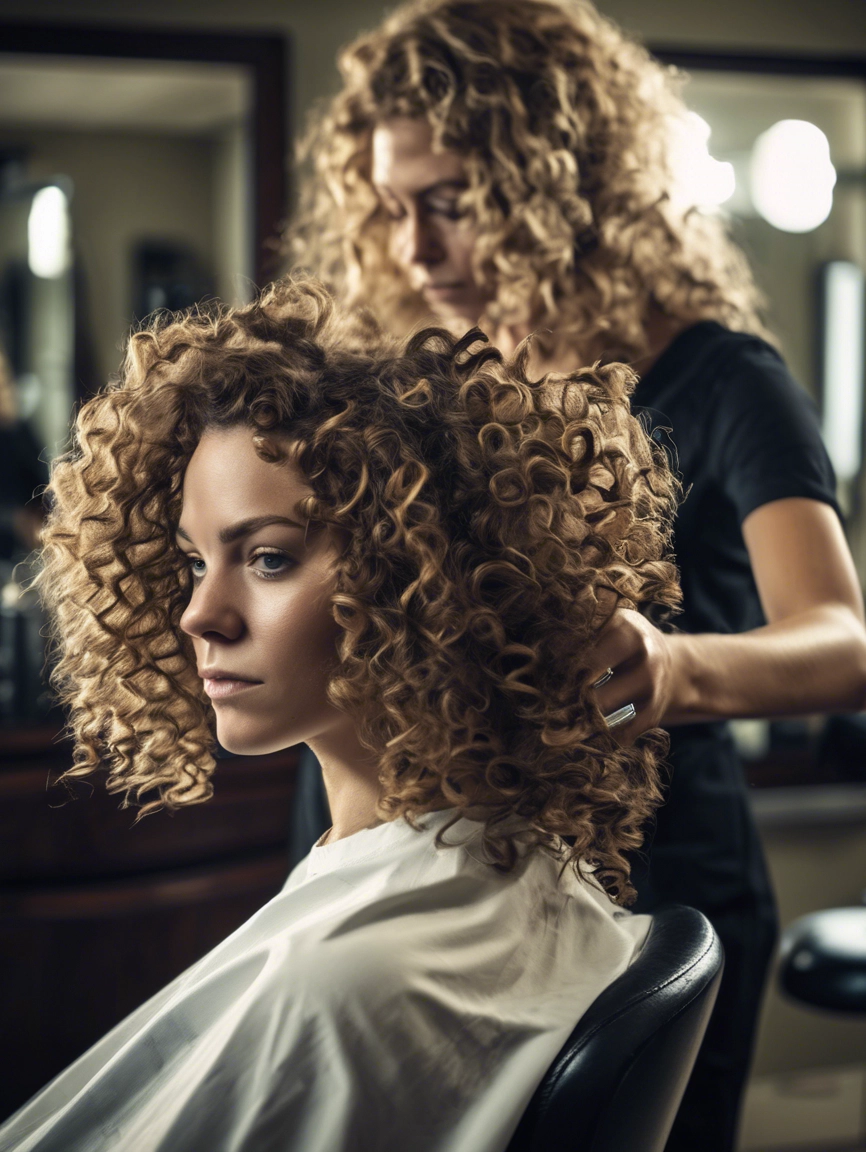
Not in every case. Seeing natural curl formation can help with length and balance, especially when curls contract by different amounts. But curls vary in density, spring and pattern across one head, and some shapes benefit from a wet foundation or a combination of methods. A dry cut is not a guarantee of even curls, a particular length or an easier routine.
My approach to curly hair in Brisbane’s north begins with observing how the texture behaves. The same principle applies to straight and wavy hair: I consider natural fall and growth direction before deciding what to remove.
When might wet cutting still be useful?
Wet cutting can be useful for establishing a precise line, working through dense or tangled hair, or creating a shape where the hair’s wet length gives a clear starting point. It can also help when the finished style will usually be blow-dried. Water changes how hair hangs temporarily, so I check the result again as it dries if that is important to the design.
There is no single correct method for every client. Hair texture, density, growth patterns, previous chemical services, styling habits and the agreed shape all influence the decision.
Dry cutting and the Shizen Method
In the Shizen Method, I use Nagare—the principle of natural flow—to observe how hair grows, falls, bends and moves. Dry cutting is one possible tool within that approach, not a fixed rule. The aim is to create a shape that belongs to the person wearing it and makes sense in everyday life.
A considered haircut in Deception Bay
At the one-to-one Private Atelier in Deception Bay, we talk about the length and shape you want, how you usually wear your hair and how much time you give it at home. I then choose the cutting approach that gives me the clearest view of the design. A haircut may include wet work, dry refinement or both.
If you are considering a haircut, you can view the current services and Saturday booking options. The article’s focus is the decision-making behind dry cutting; your consultation determines what is appropriate for your hair.
For curl-specific care at home, explore the LOHY curly hair range. This is an affiliate link; the Atelier may earn a commission from purchases made through it, at no extra cost to you.
Enjoyed this article?