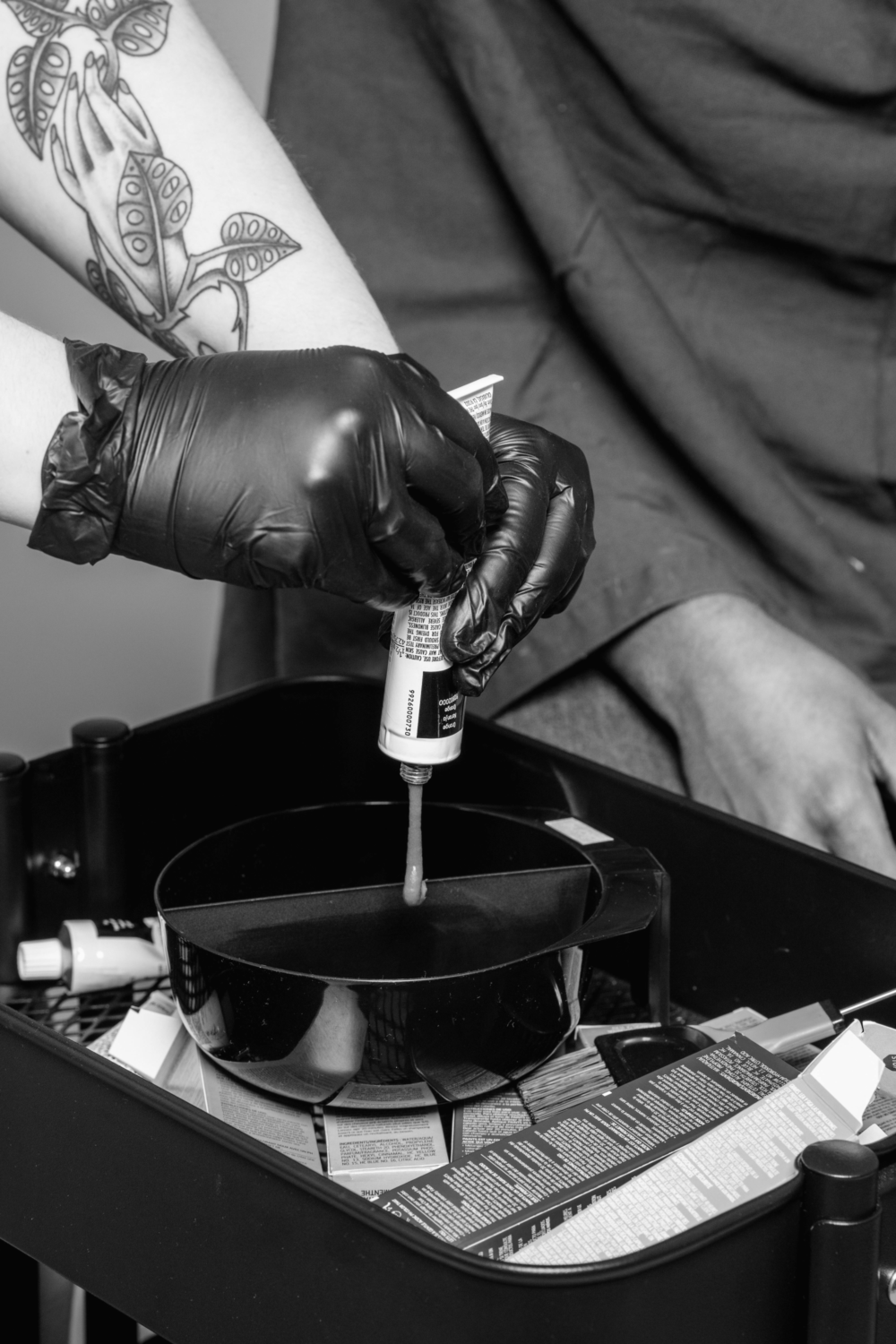
Box dye and salon colour can use some of the same types of colour chemistry, so the difference is not simply “bad” versus “good”. A box kit is designed as a ready-to-use option for a broad range of people. In a salon, the colourist can assess your hair history, choose a suitable product and developer, plan placement and adjust the approach as the hair responds. That individual decision-making is often the important difference.
What is the difference between box dye and salon colour?
Retail and professional ranges may both include permanent oxidative colour, demi-permanent colour or other types of dye. Their exact ingredients and instructions vary by product. A box kit generally supplies a set formula and developer with instructions intended for home use. Professional colour systems give a trained colourist more choices about shade, strength, placement and timing, used according to the manufacturer’s directions and the hair’s condition.
Neither label guarantees a particular result. Salon colour is not automatically gentler, and box colour is not automatically damaging. The outcome depends on the product, how it is used, the starting colour, the hair’s condition and its colour history.
Why can box dye be difficult to change later?
The main challenge is uncertainty. A colourist may not know exactly which product, shade or application method has been used, or how many layers are present through the lengths. Hair can also have different histories from roots to ends. When colour is applied repeatedly over previously coloured hair, the result may become darker or more opaque in some areas, while other areas may fade differently.
This matters when you want to go lighter, change tone, blend grey or correct an uneven result. Lightening previously coloured hair can be complex and may require more than one appointment. The hair’s condition and response determine what is realistic; a quick correction or a precise match cannot be guaranteed.
When might home colour suit you?
If you are maintaining a familiar shade on your own, understand the instructions and are happy with the result, a home kit may suit your needs. Follow the product directions, including any required allergy alert test, and avoid using a product contrary to its instructions. If your hair has a history of colour, lightening, chemical straightening or a sensitive scalp, get professional advice before making a major change.
Try to avoid repeatedly applying permanent colour to the full length when your aim is only to refresh the roots. The right approach depends on the product and the state of the lengths; repeated overlap can contribute to an uneven build-up of colour and make future changes harder.
When is a colour consultation useful?
A consultation is useful when you want a significant change, a more natural-looking result, help with resistant grey hair, or a plan for previously coloured hair. At my private one-to-one atelier in Deception Bay, I ask about your colour history and what you want the colour to do as it grows and fades. We can then discuss options and limits before deciding whether a service is appropriate.
For grey hair, see the current grey coverage and blending approach. If you are weighing up a shade or tone, the Shizen Colour Discovery quiz can help you explore colour direction, though an online quiz cannot assess hair condition or replace an in-person consultation.
Choose based on the result and your hair history
There is no need to feel judged for using box colour. The useful next step is to be open about what has been applied, when, and how often. That information helps a colourist assess the starting point, explain the options and set realistic expectations.
If you would like to discuss a colour plan in Deception Bay, explore the Private Atelier experience and check the current Saturday booking options. You can also read why hair colour fades differently for practical context on keeping a colour looking considered over time.
Enjoyed this article?