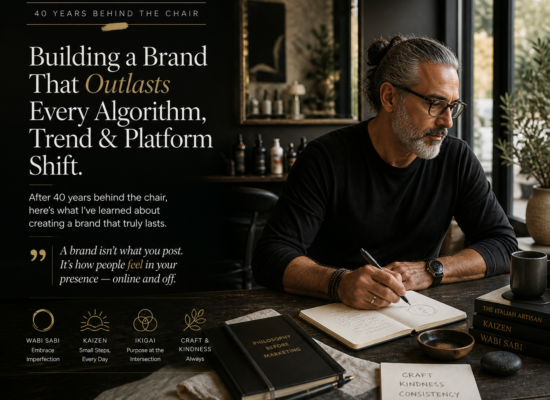
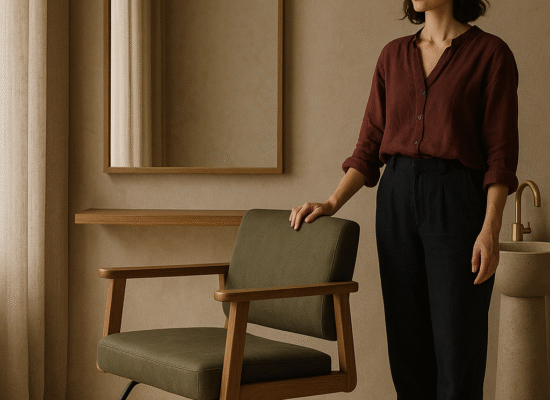
Wabi-sabi has long informed how I think about beauty and hairdressing. I first encountered the idea through fellow hairdresser Dario Chicco, and it gave me language for something I valued: paying attention to character, change and the individual rather than chasing a uniform ideal.
The term has a rich cultural and artistic history; it should not be reduced to a salon trend or a simple instruction to make things imperfect. In my work, it is an influence and a prompt for reflection, not a claim that every haircut or colour should look unfinished.
What it asks of a hairdresser
For me, the useful question is not “How do I make this hair perfectly symmetrical?” or “How do I reproduce the photograph exactly?” It is “What is this hair doing, what does this person want, and what choices will help the result feel at home on them?”
That still requires precision. Shape, balance, colour placement, condition and the client’s expectations matter. A naturally irregular growth pattern may call for a different balance from the one you would choose on a mannequin. A slight asymmetry can be intentional when it supports the person’s features and movement; it is not automatically more authentic or beautiful.
Notice change without making it a problem
Hair changes with length, age, colour history, health and the way it is worn. A thoughtful plan allows for those changes. Sometimes that means keeping a natural texture visible. Sometimes it means choosing coverage, a smooth finish or a more structured shape. Working with individuality does not require the client to embrace a result they do not want.
How this informs the Shizen Method
Wabi-sabi is one influence on my outlook. The Shizen Method is my practical framework for haircutting: observe natural fall, growth, density, texture and movement, then use established technique to build a considered shape. The aesthetic I value is understated and personal; the method remains deliberate and teachable.
In the salon, the idea becomes concrete through listening, assessment and clear decisions. We can explain what will change, what will remain visible, and how the cut or colour is likely to behave as it grows. The aim is not to impose a philosophy on the client, but to make work that respects the person wearing it.
For hairdressers, this way of thinking keeps craft attentive: remain curious, practise the fundamentals, and let observation refine the plan. Beauty can include irregularity and change, but care and skill still matter.
Enjoyed this article?