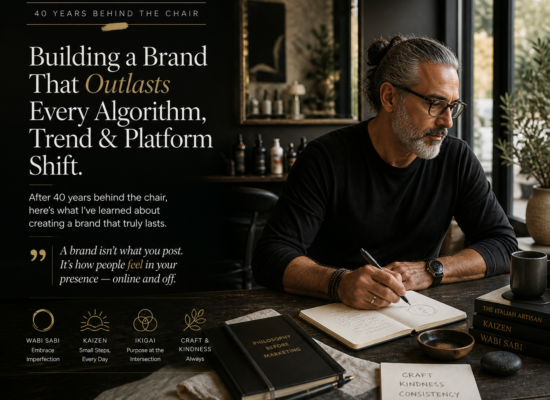
Kaizen is a Japanese term commonly used for improvement through ongoing change. In hairdressing, it can be a practical way to examine one part of your work, make a considered adjustment and see whether that change helps. Improvement does not always mean working faster or serving more clients; quality, care and a sustainable pace matter too.
Choose one question to work on
After an appointment or at the end of a week, note one specific point you would like to understand better. It might be how you explain maintenance, how a particular shape falls after washing, how you prepare for a colour correction, or whether your station is arranged in a way that supports comfortable work.
Make the question small enough to observe. “Become a better colourist” is too broad. “How clearly am I explaining the difference between blending and full coverage?” gives you something you can review in real consultations.
Try a change, then reflect
Use a simple cycle:
- Describe the situation without blaming yourself or the client.
- Choose one change that fits the evidence and your training.
- Apply it consistently enough to observe the result.
- Review what happened, including what did not improve.
- Keep, adjust or stop the change based on what you learned.
For a technical decision, use trusted education and the product manufacturer’s instructions. A small experiment is not a reason to bypass safety, consultation, testing or a service’s established protocol. For client communication, ask whether the client understood their options and expectations rather than assuming that a smooth appointment means everything was clear.
Improvement should include the working conditions
Workflow matters when it reduces avoidable strain, confusion or waiting. It should not be used to press staff into unsustainable speed or to remove the time needed for assessment. Consider whether a process helps the client and the stylist, and whether the improvement can be maintained in an ordinary week.
Feedback is useful when it is specific and respectful. Invite colleagues to share what they observe, and treat client comments as one source of information rather than a complete measure of technical quality. Track patterns over time instead of drawing a conclusion from one unusual appointment.
Keep learning part of the craft
Some refinements are practical: clearer consultation notes, a more comfortable station, better timing estimates. Others take continued education and supervised practice. Both can support thoughtful work, but neither guarantees business growth or mastery on its own.
In my own practice, continual refinement supports the Shizen Method: observe the hair and the person, apply sound technique, then learn from how the result lives beyond the salon. Kaizen is useful when it keeps that attention alive without turning every moment into a performance metric.
Enjoyed this article?