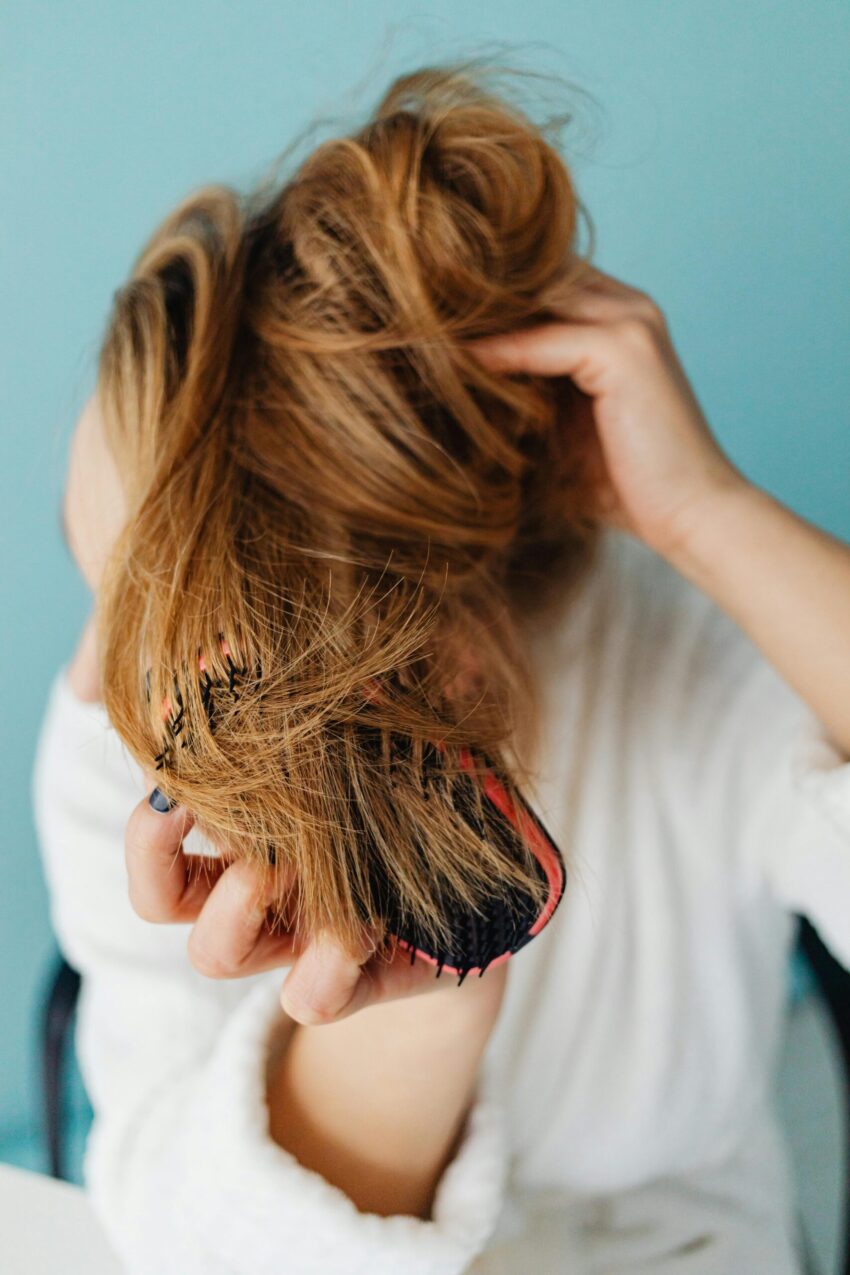
Hair can tangle for many reasons: its length and texture, friction from clothing or bedding, wind, product build-up, dryness, damage, or the way it is handled. A knot does not by itself prove that hair is unhealthy. The useful question is where tangles form and what happens when you detangle them.
Start with the pattern
Notice whether knots gather at the nape, around the ends, or throughout the hair. Repeated tangling at the same point may relate to friction, shape, or damaged ends. Curly and coily hair can naturally interlock more readily because of its bends; straight hair can also tangle, especially when it is long, fine, layered, or exposed to friction.
Detangle gently, in sections
Use fingers or a suitable wide-tooth comb and work from the ends upwards, supporting the section above the knot so you are not pulling on the scalp. Add conditioner or a detangling product if it gives enough slip for your hair. There is no need to force a brush through resistance. Follow the product directions, and detangle curly hair when it is wet or damp if that is when your own pattern releases most easily.
Use products for the problem you have
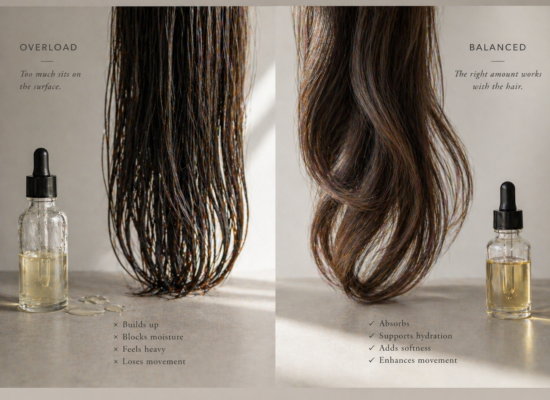
Conditioner can improve slip and make combing easier, but more product is not always better. If hair feels coated or limp, reduce the amount or frequency and see how it responds. A mask or leave-in may help some lengths feel softer; it cannot repair split ends or permanently rebuild damaged fibre. Avoid applying rich products to the scalp unless the label recommends it.
Reduce friction where you can
Loosely secure longer hair for sleep or windy activities if that suits your style. A smooth pillowcase may reduce friction for some people, but it is optional. Avoid tight braids, rough towel rubbing and repeatedly brushing dry curls if those habits make your hair snag or break.
When a haircut or assessment may help
If the ends repeatedly knot, feel rough or catch on one another, a trim may remove the most worn length. The right amount depends on your goals; trimming does not make hair grow faster. Persistent matting, sudden changes in shedding, scalp discomfort or breakage near the roots deserve a closer assessment and, when appropriate, medical advice.
For a practical guide to caring for your own pattern, try the Shizen Curl Care Quiz. If tangling is part of a broader concern about shape or manageability, you can read about the curly hair service or Shizen Method. Anthony Presotto Private Atelier is a one-to-one, Saturday-by-appointment studio in Deception Bay. Explore booking options if an in-person consultation would be useful.
Enjoyed this article?