Why does hair turn yellow in the sun? It can happen especially to white, grey, blonde, highlighted or lightened hair. Sun exposure is one possible contributor, but a yellow cast can also come from heat, product deposits, minerals, smoke or changes in a toner. The right response depends on what you are seeing and the history of your hair.
Why can sunlight change hair colour?
Hair fibre is not living tissue, so it cannot repair itself after exposure. Sunlight, including ultraviolet and visible light, can alter natural pigment and the proteins in the hair fibre. Depending on the hair’s original pigment and chemical history, the visible change may be lightening, fading, a warmer tone or yellowing.
White and grey hair has little or no melanin to shield the fibre, and research has documented photo-yellowing in white and grey hair. Coloured or lightened hair can also change: existing pigment may fade or shift, while bleaching and colouring can leave the fibre more vulnerable to further weathering. The exact chemistry is complex. A single explanation, such as one yellow compound building up in every case, does not account for all hair or all yellowing.
Sun yellowing is not the only cause
A yellow or brassy appearance can have several sources. On lightened hair, warmth may become more visible as a toner fades or as the underlying pigment shows through. White or grey hair may pick up deposits from products, hard water, smoke or other environmental exposure. Heat styling and the condition of the hair can also affect how its surface reflects light.
If the change appeared suddenly, is uneven, or does not improve with your usual gentle cleansing, avoid piling on corrective products. A hairdresser can assess the colour, feel and history of the fibre before deciding whether cleansing, a tonal adjustment or no colour service is appropriate.
Practical ways to limit sun exposure
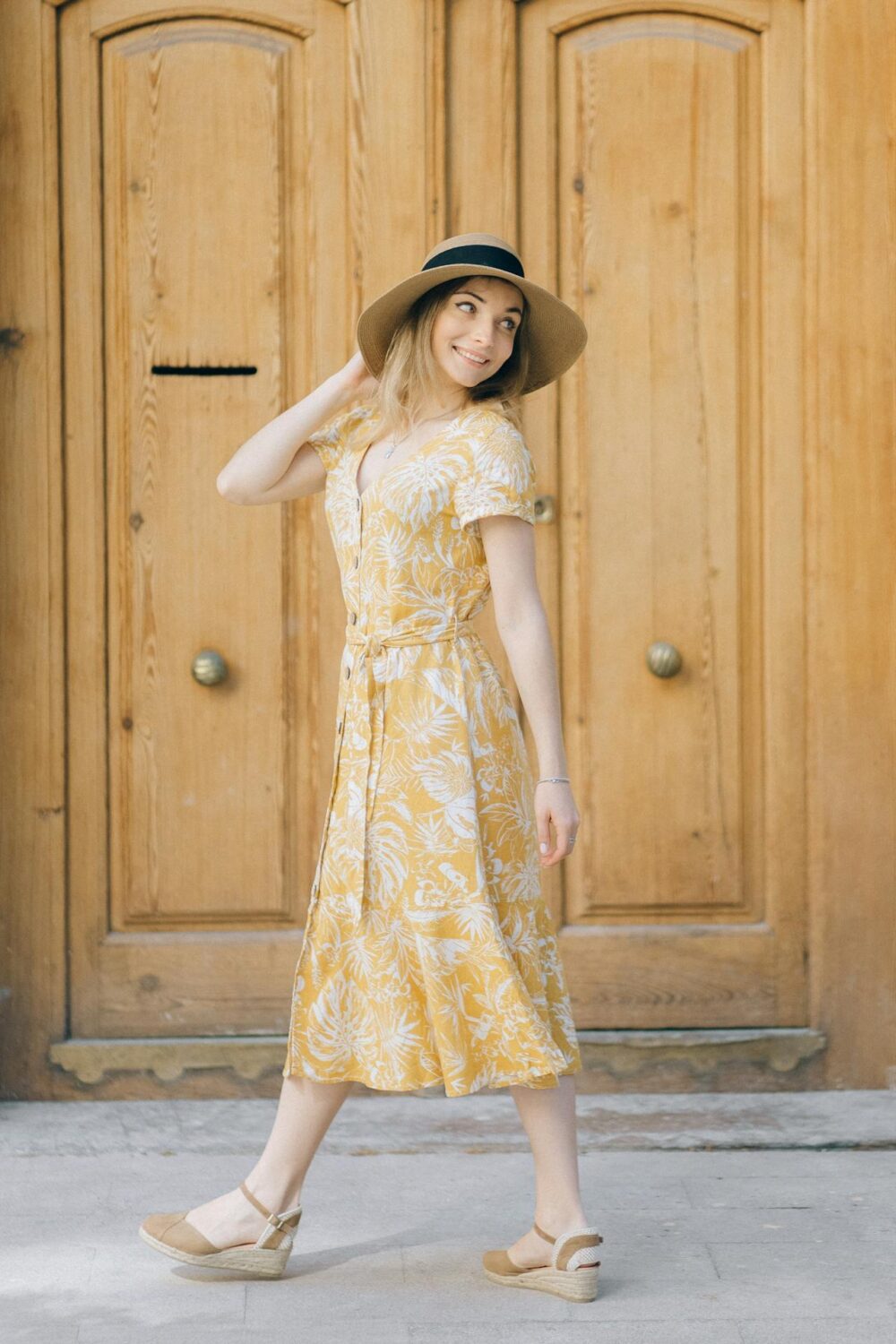
- Wear a hat or seek shade during prolonged time in strong sun. A physical covering reduces direct exposure to the hair.
- Use a hair product only for the protection stated on its label. Some products are marketed for UV protection, but performance and directions vary. They are not automatically equivalent to sunscreen for skin, and no product can guarantee that colour will not change.
- Rinse after swimming and follow with a suitable conditioner if your hair feels dry. Pool and seawater exposure can contribute to dryness or deposits, though it is not the explanation for every colour change.
- Keep heat styling considered. Use a suitable heat protectant as directed and avoid unnecessary high heat, particularly on lightened or fragile lengths.
- Use purple shampoo sparingly if it suits your hair. It can temporarily counter some yellow tones on pale hair, but it does not prevent sun exposure or restore damaged fibre. Frequent use may leave hair dull, dry-feeling or violet-toned.
When colour needs a professional assessment
Before choosing a toner or colour correction, consider whether the hair is natural, grey, coloured or lightened; what products have been used; and whether the fibre is strong enough for another chemical service. A toner may adjust the appearance of a tone for a time, but it cannot reverse structural damage or make every yellow cast disappear permanently. The result and maintenance depend on the starting colour, hair condition and exposure.
If you are considering a colour change, the Shizen Colour Discovery quiz can help you reflect on the direction you prefer. For a change involving grey coverage or a softer transition, read about grey hair coverage and blending. You can also explore why hair colour fades.
A considered approach to changing tone
At the Private Atelier in Deception Bay, colour decisions begin with the hair in front of us: its natural pigment, previous colour, texture, condition and the result you want to live with. A tonal adjustment is not always the best answer. If you would like advice about your own hair, you can learn about the one-to-one Atelier experience or view current services and booking options.
Enjoyed this article?